Agent-Based Models of Polarization and Ethnocentrism
Building on the Cambridge Element Agent Based Models of Social Life: Fundamentals (Cambridge, 2020), we move on to the next level. We do this by building agent based models of polarization and ethnocentrism. In the process, we develop: stochastic models, which add a crucial element of uncertainty to human interaction; models of human interactions structured by social networks; and 'evolutionary' models in which agents using more effective decision rules are more likely to survive and prosper than others. The aim is to leave readers with an effective toolkit for building, running and analyzing agent based modes of social interaction.
Product Information
Product Information
Shipping & Returns
Shipping & Returns
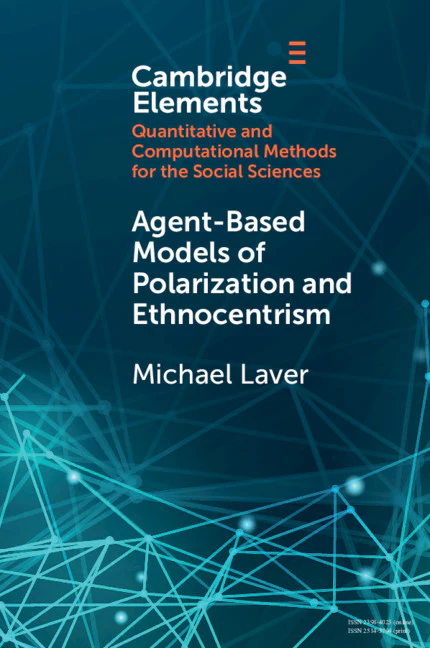
Agent-Based Models of Polarization and Ethnocentrism
Agent-Based Models of Polarization and Ethnocentrism
Building on the Cambridge Element Agent Based Models of Social Life: Fundamentals (Cambridge, 2020), we move on to the next level. We do this by building agent based models of polarization and ethnocentrism. In the process, we develop: stochastic models, which add a crucial element of uncertainty to human interaction; models of human interactions structured by social networks; and 'evolutionary' models in which agents using more effective decision rules are more likely to survive and prosper than others. The aim is to leave readers with an effective toolkit for building, running and analyzing agent based modes of social interaction.
Original: $24.28
-65%$24.28
$8.50Product Information
Product Information
Shipping & Returns
Shipping & Returns
Description
Building on the Cambridge Element Agent Based Models of Social Life: Fundamentals (Cambridge, 2020), we move on to the next level. We do this by building agent based models of polarization and ethnocentrism. In the process, we develop: stochastic models, which add a crucial element of uncertainty to human interaction; models of human interactions structured by social networks; and 'evolutionary' models in which agents using more effective decision rules are more likely to survive and prosper than others. The aim is to leave readers with an effective toolkit for building, running and analyzing agent based modes of social interaction.