Bureaucratic Resistance in Times of Democratic Backsliding
This Element investigates how public employees react to illiberal policies proposed by authoritarian leaders during democratic backsliding. Using survey experiments employed with 942 bureaucrats from the United States, the United Kingdom, and Brazil, the research explores their willingness to resist the implementation of illiberal policies. Findings show a significant readiness for resistance. The results indicate varying levels of resistance across countries, with Brazilian bureaucrats showing the highest, followed by British and American counterparts. Additionally, within-country analysis identifies individual characteristics affecting the intent to resist. The Element explores the dynamic relationship between politicians and bureaucrats, the autonomy of civil servants, and the perils of working under autocratic leadership. It also underscores the need for tailored strategies in recruiting and retaining public employees to uphold democratic values. These findings shed light on the complex dynamics between bureaucrats and democratic governance, emphasizing the importance of safeguarding institutions in times of authoritarian challenges.
Product Information
Product Information
Shipping & Returns
Shipping & Returns
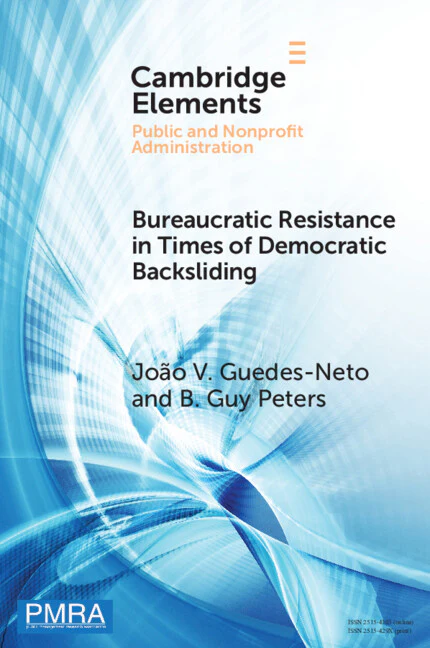
Bureaucratic Resistance in Times of Democratic Backsliding
Bureaucratic Resistance in Times of Democratic Backsliding
This Element investigates how public employees react to illiberal policies proposed by authoritarian leaders during democratic backsliding. Using survey experiments employed with 942 bureaucrats from the United States, the United Kingdom, and Brazil, the research explores their willingness to resist the implementation of illiberal policies. Findings show a significant readiness for resistance. The results indicate varying levels of resistance across countries, with Brazilian bureaucrats showing the highest, followed by British and American counterparts. Additionally, within-country analysis identifies individual characteristics affecting the intent to resist. The Element explores the dynamic relationship between politicians and bureaucrats, the autonomy of civil servants, and the perils of working under autocratic leadership. It also underscores the need for tailored strategies in recruiting and retaining public employees to uphold democratic values. These findings shed light on the complex dynamics between bureaucrats and democratic governance, emphasizing the importance of safeguarding institutions in times of authoritarian challenges.
Original: $24.28
-65%$24.28
$8.50Product Information
Product Information
Shipping & Returns
Shipping & Returns
Description
This Element investigates how public employees react to illiberal policies proposed by authoritarian leaders during democratic backsliding. Using survey experiments employed with 942 bureaucrats from the United States, the United Kingdom, and Brazil, the research explores their willingness to resist the implementation of illiberal policies. Findings show a significant readiness for resistance. The results indicate varying levels of resistance across countries, with Brazilian bureaucrats showing the highest, followed by British and American counterparts. Additionally, within-country analysis identifies individual characteristics affecting the intent to resist. The Element explores the dynamic relationship between politicians and bureaucrats, the autonomy of civil servants, and the perils of working under autocratic leadership. It also underscores the need for tailored strategies in recruiting and retaining public employees to uphold democratic values. These findings shed light on the complex dynamics between bureaucrats and democratic governance, emphasizing the importance of safeguarding institutions in times of authoritarian challenges.