Can Governance be Intelligent?
Intelligence is a concept that occurs in multiple contexts and has various meanings. It refers to the ability of human beings and other entities to think and understand the world around us. It represents a set of skills directed at problem-solving and targeted at producing effective results. Thus, intelligence and governance are an odd couple. We expect governments and other governing institutions to operate in an intelligent manner, but too frequently we criticize their understanding of serious public problems, their decisions, behaviors, managerial skills, ability to solve urgent problems, and overall governability wisdom. This manuscript deals with such questions using interdisciplinary insights (i.e., psychological, social, institutional, biological, technological) on intelligence and integrating it with knowledge in governance, administration, and management in public and non-profit sectors. We propose the IntelliGov framework, that may extend both our theoretical, methodological, analytical, and applied understanding of intelligent governance in the digital age.
Product Information
Product Information
Shipping & Returns
Shipping & Returns
Can Governance be Intelligent?
Can Governance be Intelligent?
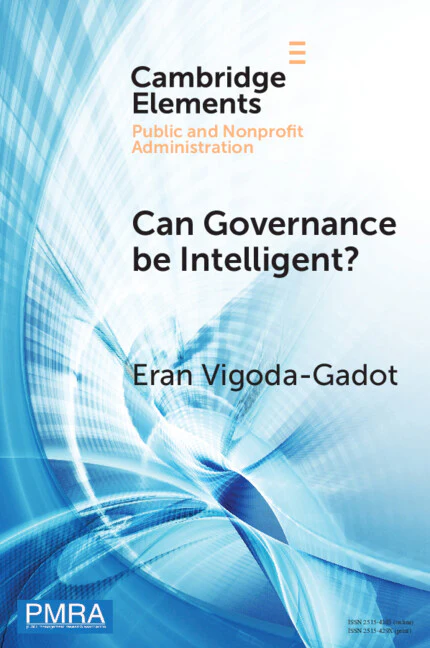
Intelligence is a concept that occurs in multiple contexts and has various meanings. It refers to the ability of human beings and other entities to think and understand the world around us. It represents a set of skills directed at problem-solving and targeted at producing effective results. Thus, intelligence and governance are an odd couple. We expect governments and other governing institutions to operate in an intelligent manner, but too frequently we criticize their understanding of serious public problems, their decisions, behaviors, managerial skills, ability to solve urgent problems, and overall governability wisdom. This manuscript deals with such questions using interdisciplinary insights (i.e., psychological, social, institutional, biological, technological) on intelligence and integrating it with knowledge in governance, administration, and management in public and non-profit sectors. We propose the IntelliGov framework, that may extend both our theoretical, methodological, analytical, and applied understanding of intelligent governance in the digital age.
Original: $24.28
-65%$24.28
$8.50Product Information
Product Information
Shipping & Returns
Shipping & Returns
Description
Intelligence is a concept that occurs in multiple contexts and has various meanings. It refers to the ability of human beings and other entities to think and understand the world around us. It represents a set of skills directed at problem-solving and targeted at producing effective results. Thus, intelligence and governance are an odd couple. We expect governments and other governing institutions to operate in an intelligent manner, but too frequently we criticize their understanding of serious public problems, their decisions, behaviors, managerial skills, ability to solve urgent problems, and overall governability wisdom. This manuscript deals with such questions using interdisciplinary insights (i.e., psychological, social, institutional, biological, technological) on intelligence and integrating it with knowledge in governance, administration, and management in public and non-profit sectors. We propose the IntelliGov framework, that may extend both our theoretical, methodological, analytical, and applied understanding of intelligent governance in the digital age.