Cognition and Conspiracy Theories
This Element deals with the relationship between cognition, understood as the process of acquiring and developing knowledge, and diverse types of conspiracy theories, or short, 'CTs'. Section 1 lays the groundwork for the analysis by determining four components of narrative argumentative framing in CTs, of which the first three are constitutive for all CTs, with a fourth representing the 'optional' collective action-guiding “scenario” component. Section 2 exemplifies manifestations of these components by discussing contemporary and historical 'hoax' and 'asserting' CTs and 'empowering' CTs. Section 3 takes a cognitive-evolutionist and pragmatic view at the conditions for the 'success' of CT scenarios. In conclusion. Section 4 formulates lessons for countering the effects of socially detrimental CTs by deconstructing them and by obstructing their dissemination.
Product Information
Product Information
Shipping & Returns
Shipping & Returns
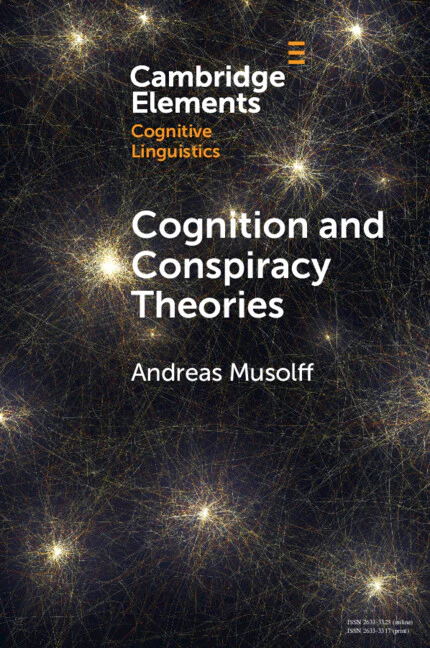
Cognition and Conspiracy Theories
Cognition and Conspiracy Theories
This Element deals with the relationship between cognition, understood as the process of acquiring and developing knowledge, and diverse types of conspiracy theories, or short, 'CTs'. Section 1 lays the groundwork for the analysis by determining four components of narrative argumentative framing in CTs, of which the first three are constitutive for all CTs, with a fourth representing the 'optional' collective action-guiding “scenario” component. Section 2 exemplifies manifestations of these components by discussing contemporary and historical 'hoax' and 'asserting' CTs and 'empowering' CTs. Section 3 takes a cognitive-evolutionist and pragmatic view at the conditions for the 'success' of CT scenarios. In conclusion. Section 4 formulates lessons for countering the effects of socially detrimental CTs by deconstructing them and by obstructing their dissemination.
Original: $24.28
-65%$24.28
$8.50Product Information
Product Information
Shipping & Returns
Shipping & Returns
Description
This Element deals with the relationship between cognition, understood as the process of acquiring and developing knowledge, and diverse types of conspiracy theories, or short, 'CTs'. Section 1 lays the groundwork for the analysis by determining four components of narrative argumentative framing in CTs, of which the first three are constitutive for all CTs, with a fourth representing the 'optional' collective action-guiding “scenario” component. Section 2 exemplifies manifestations of these components by discussing contemporary and historical 'hoax' and 'asserting' CTs and 'empowering' CTs. Section 3 takes a cognitive-evolutionist and pragmatic view at the conditions for the 'success' of CT scenarios. In conclusion. Section 4 formulates lessons for countering the effects of socially detrimental CTs by deconstructing them and by obstructing their dissemination.