Coherentism
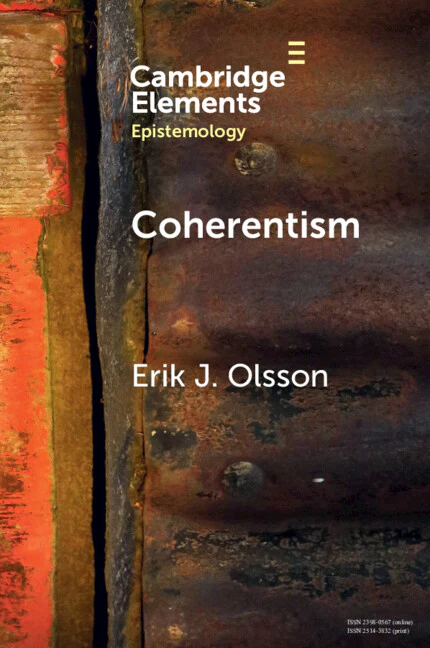
Perhaps the most fundamental question of epistemology asks on what grounds our knowledge of the world ultimately rests. The traditional Cartesian answer is that it rests on indubitable facts arrived at through rational insight or introspection. Coherentists reject this answer, claiming instead that knowledge arises from relations of coherence or mutual support: if our beliefs cohere, we can be sure that they are mostly true. The first part of this Element introduces the reader to the main ideas and problems of coherentism. The next part describes the 'probabilistic turn', leading up to recent demonstrations that coherence fails to be conducive to truth. The final part reassesses the current debate about the proper definition of coherence from the standpoint of Rudolf Carnap's methodology of explication. The upshot is a tentative and qualified defence of one of the early coherence measures.
Product Information
Product Information
Shipping & Returns
Shipping & Returns
Coherentism
Coherentism
Perhaps the most fundamental question of epistemology asks on what grounds our knowledge of the world ultimately rests. The traditional Cartesian answer is that it rests on indubitable facts arrived at through rational insight or introspection. Coherentists reject this answer, claiming instead that knowledge arises from relations of coherence or mutual support: if our beliefs cohere, we can be sure that they are mostly true. The first part of this Element introduces the reader to the main ideas and problems of coherentism. The next part describes the 'probabilistic turn', leading up to recent demonstrations that coherence fails to be conducive to truth. The final part reassesses the current debate about the proper definition of coherence from the standpoint of Rudolf Carnap's methodology of explication. The upshot is a tentative and qualified defence of one of the early coherence measures.
Original: $24.28
-65%$24.28
$8.50Product Information
Product Information
Shipping & Returns
Shipping & Returns
Description
Perhaps the most fundamental question of epistemology asks on what grounds our knowledge of the world ultimately rests. The traditional Cartesian answer is that it rests on indubitable facts arrived at through rational insight or introspection. Coherentists reject this answer, claiming instead that knowledge arises from relations of coherence or mutual support: if our beliefs cohere, we can be sure that they are mostly true. The first part of this Element introduces the reader to the main ideas and problems of coherentism. The next part describes the 'probabilistic turn', leading up to recent demonstrations that coherence fails to be conducive to truth. The final part reassesses the current debate about the proper definition of coherence from the standpoint of Rudolf Carnap's methodology of explication. The upshot is a tentative and qualified defence of one of the early coherence measures.