Counter-Stereotypes and Attitudes Toward Gender and LGBTQ Equality
Insights from social psychology and the gender and politics literature, as well as discussions and campaigns in the policymaking world, suggest that exposure to counter-stereotypes about gender roles might improve people's attitudes toward gender equality and LGBTQ rights. The authors test this expectation by conducting five survey experiments (N=6,916) and a separate, follow-up experiment (N=3,600) in the US context using counter-stereotypical treatments commonly encountered in the real world. They examine both political and non-political attitudes, manipulate stereotypes about both men and women, and provide visual as well as textual stimuli. The treatments undermined stereotypes about the gender roles depicted in the counter-stereotypical exemplars. However, they failed to alter respondents' generic core beliefs about women and men and increase equitable attitudes. The results improve our understanding of how stereotypes contribute to gender and anti-LGBTQ bias.
Product Information
Product Information
Shipping & Returns
Shipping & Returns
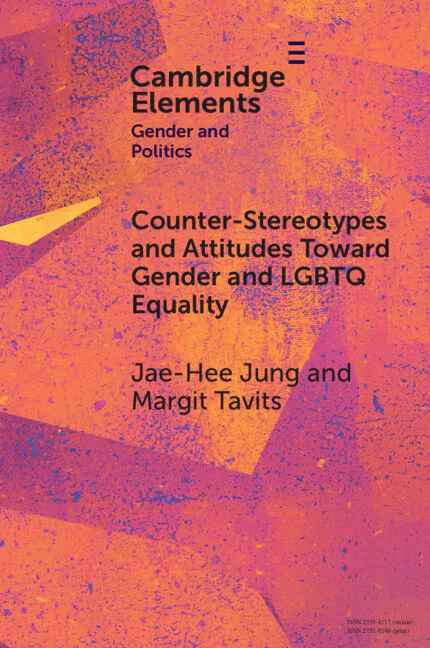
Counter-Stereotypes and Attitudes Toward Gender and LGBTQ Equality
Counter-Stereotypes and Attitudes Toward Gender and LGBTQ Equality
Insights from social psychology and the gender and politics literature, as well as discussions and campaigns in the policymaking world, suggest that exposure to counter-stereotypes about gender roles might improve people's attitudes toward gender equality and LGBTQ rights. The authors test this expectation by conducting five survey experiments (N=6,916) and a separate, follow-up experiment (N=3,600) in the US context using counter-stereotypical treatments commonly encountered in the real world. They examine both political and non-political attitudes, manipulate stereotypes about both men and women, and provide visual as well as textual stimuli. The treatments undermined stereotypes about the gender roles depicted in the counter-stereotypical exemplars. However, they failed to alter respondents' generic core beliefs about women and men and increase equitable attitudes. The results improve our understanding of how stereotypes contribute to gender and anti-LGBTQ bias.
Original: $24.28
-65%$24.28
$8.50Product Information
Product Information
Shipping & Returns
Shipping & Returns
Description
Insights from social psychology and the gender and politics literature, as well as discussions and campaigns in the policymaking world, suggest that exposure to counter-stereotypes about gender roles might improve people's attitudes toward gender equality and LGBTQ rights. The authors test this expectation by conducting five survey experiments (N=6,916) and a separate, follow-up experiment (N=3,600) in the US context using counter-stereotypical treatments commonly encountered in the real world. They examine both political and non-political attitudes, manipulate stereotypes about both men and women, and provide visual as well as textual stimuli. The treatments undermined stereotypes about the gender roles depicted in the counter-stereotypical exemplars. However, they failed to alter respondents' generic core beliefs about women and men and increase equitable attitudes. The results improve our understanding of how stereotypes contribute to gender and anti-LGBTQ bias.