Echinoderm Morphological Disparity: Methods, Patterns, and Possibilities
The quantification of morphology through time is a vital tool in elucidating macroevolutionary patterns. Studies of disparity require intense effort but can provide insights beyond those gained using other methodologies. Over the last several decades, studies of disparity have proliferated, often using echinoderms as a model organism. Echinoderms have been used to study the methodology of disparity analyses and potential biases as well as documenting the morphological patterns observed in clades through time. Combining morphological studies with phylogenetic analyses or other disparate data sets allows for the testing of detailed and far-reaching evolutionary hypotheses.
Product Information
Product Information
Shipping & Returns
Shipping & Returns
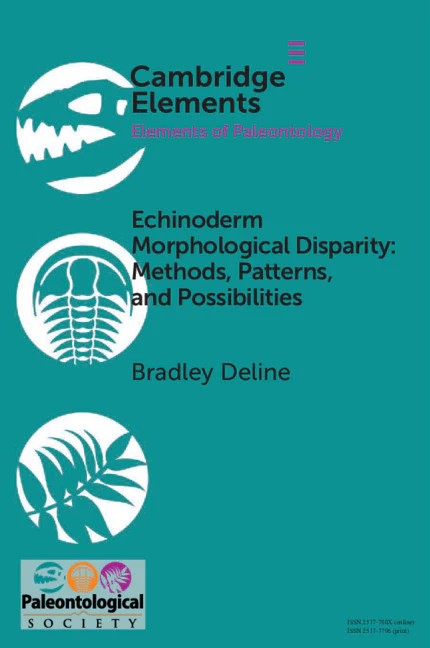
Echinoderm Morphological Disparity: Methods, Patterns, and Possibilities
Echinoderm Morphological Disparity: Methods, Patterns, and Possibilities
The quantification of morphology through time is a vital tool in elucidating macroevolutionary patterns. Studies of disparity require intense effort but can provide insights beyond those gained using other methodologies. Over the last several decades, studies of disparity have proliferated, often using echinoderms as a model organism. Echinoderms have been used to study the methodology of disparity analyses and potential biases as well as documenting the morphological patterns observed in clades through time. Combining morphological studies with phylogenetic analyses or other disparate data sets allows for the testing of detailed and far-reaching evolutionary hypotheses.
Original: $24.28
-65%$24.28
$8.50Product Information
Product Information
Shipping & Returns
Shipping & Returns
Description
The quantification of morphology through time is a vital tool in elucidating macroevolutionary patterns. Studies of disparity require intense effort but can provide insights beyond those gained using other methodologies. Over the last several decades, studies of disparity have proliferated, often using echinoderms as a model organism. Echinoderms have been used to study the methodology of disparity analyses and potential biases as well as documenting the morphological patterns observed in clades through time. Combining morphological studies with phylogenetic analyses or other disparate data sets allows for the testing of detailed and far-reaching evolutionary hypotheses.