Identity Development during STEM Integration for Underrepresented Minority Students
Over the past three decades, research efforts and interventions have been implemented across the United States to increase the persistence of underrepresented minority (URM) students in science, technology, engineering, and math (STEM). This Element systematically compares STEM interventions that offer resources and opportunities related to mentorship, research, and more. We organize the findings of this literature into a multi-phase framework of STEM integration and identity development. We propose four distinct phases of STEM integration: Phase 1: High School; Phase 2: Summer before College; Phase 3: First Year of College; and Phase 4: Second Year of College through Graduation. We combine tenets of theories about social identity, stereotypes and bias, and the five-factor operationalization of identity formation to describe each phase of STEM integration. Findings indicate the importance of exploration through exposure to STEM material, mentorship, and diverse STEM communities. We generalize lessons from STEM interventions to URM students across institutions.
Product Information
Product Information
Shipping & Returns
Shipping & Returns
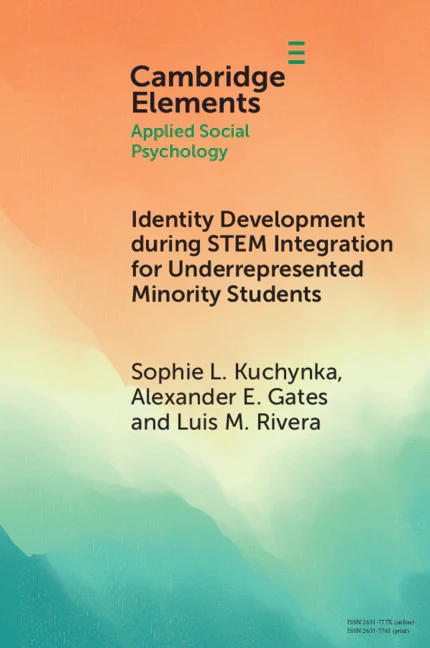
Identity Development during STEM Integration for Underrepresented Minority Students
Identity Development during STEM Integration for Underrepresented Minority Students
Over the past three decades, research efforts and interventions have been implemented across the United States to increase the persistence of underrepresented minority (URM) students in science, technology, engineering, and math (STEM). This Element systematically compares STEM interventions that offer resources and opportunities related to mentorship, research, and more. We organize the findings of this literature into a multi-phase framework of STEM integration and identity development. We propose four distinct phases of STEM integration: Phase 1: High School; Phase 2: Summer before College; Phase 3: First Year of College; and Phase 4: Second Year of College through Graduation. We combine tenets of theories about social identity, stereotypes and bias, and the five-factor operationalization of identity formation to describe each phase of STEM integration. Findings indicate the importance of exploration through exposure to STEM material, mentorship, and diverse STEM communities. We generalize lessons from STEM interventions to URM students across institutions.
Original: $24.28
-65%$24.28
$8.50Product Information
Product Information
Shipping & Returns
Shipping & Returns
Description
Over the past three decades, research efforts and interventions have been implemented across the United States to increase the persistence of underrepresented minority (URM) students in science, technology, engineering, and math (STEM). This Element systematically compares STEM interventions that offer resources and opportunities related to mentorship, research, and more. We organize the findings of this literature into a multi-phase framework of STEM integration and identity development. We propose four distinct phases of STEM integration: Phase 1: High School; Phase 2: Summer before College; Phase 3: First Year of College; and Phase 4: Second Year of College through Graduation. We combine tenets of theories about social identity, stereotypes and bias, and the five-factor operationalization of identity formation to describe each phase of STEM integration. Findings indicate the importance of exploration through exposure to STEM material, mentorship, and diverse STEM communities. We generalize lessons from STEM interventions to URM students across institutions.