Kant on Civil Society and Welfare
What justifies state-sponsored supports for individual welfare within a Kantian political system, as well as the purpose and extent of such supports and the form they may take, are vexed questions. This Element characterizes and assesses main contenders (including minimalist and middle-ground accounts) by examining the competing interpretations of Kant's larger political theory that found their social welfare claims. It then develops and defends an alternative based in civic respect. This emphasizes the perspective and institutional commitments that Kant's model of citizenship entails and what is required to respect each as both a person and a participant in joint governance.
Product Information
Product Information
Shipping & Returns
Shipping & Returns
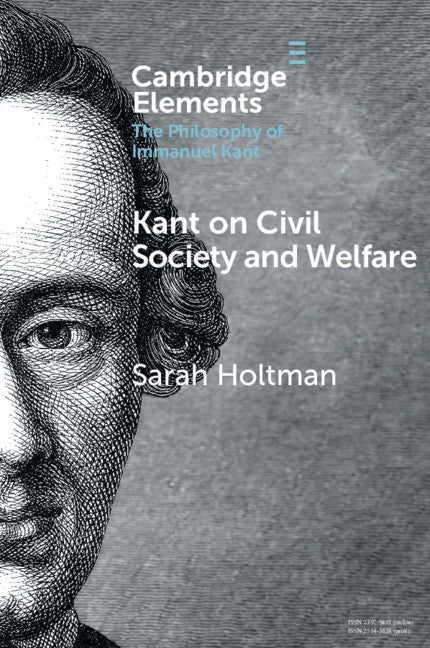
Kant on Civil Society and Welfare
Kant on Civil Society and Welfare
What justifies state-sponsored supports for individual welfare within a Kantian political system, as well as the purpose and extent of such supports and the form they may take, are vexed questions. This Element characterizes and assesses main contenders (including minimalist and middle-ground accounts) by examining the competing interpretations of Kant's larger political theory that found their social welfare claims. It then develops and defends an alternative based in civic respect. This emphasizes the perspective and institutional commitments that Kant's model of citizenship entails and what is required to respect each as both a person and a participant in joint governance.
Original: $24.28
-65%$24.28
$8.50Product Information
Product Information
Shipping & Returns
Shipping & Returns
Description
What justifies state-sponsored supports for individual welfare within a Kantian political system, as well as the purpose and extent of such supports and the form they may take, are vexed questions. This Element characterizes and assesses main contenders (including minimalist and middle-ground accounts) by examining the competing interpretations of Kant's larger political theory that found their social welfare claims. It then develops and defends an alternative based in civic respect. This emphasizes the perspective and institutional commitments that Kant's model of citizenship entails and what is required to respect each as both a person and a participant in joint governance.