Meinongianism
Meinongianism (named after Alexius Meinong) is, roughly, the view that there are not only existent but also nonexistent objects. In this book, Meinong's so-called object theory as well as “neo-Meinongian” reconstructions are presented and discussed, especially with respect to logical issues, both from a historical and a systematic perspective. Among others, the following topics are addressed: basic principles and motivations for Meinongianism; the distinction between “there is” (“$x”) and “exists” (“E!”); interpretations and kinds of quantification; Meinongianism, the principle of excluded middle and the principle of non-contradiction; the nuclear-extranuclear distinction and modes of predication; varieties of neo-Meinongianism and Meinongian logics.
Product Information
Product Information
Shipping & Returns
Shipping & Returns
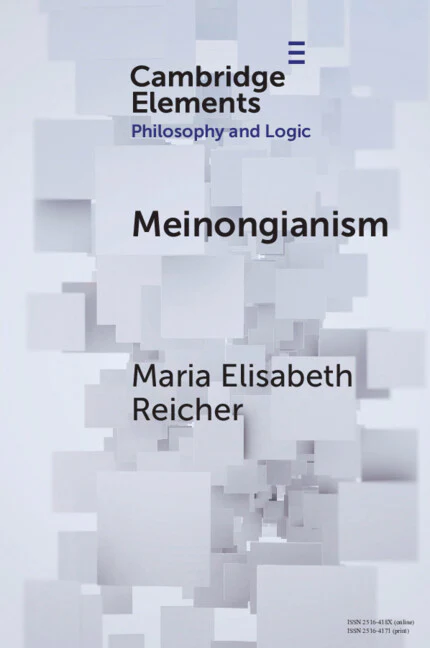
Meinongianism
Meinongianism
Meinongianism (named after Alexius Meinong) is, roughly, the view that there are not only existent but also nonexistent objects. In this book, Meinong's so-called object theory as well as “neo-Meinongian” reconstructions are presented and discussed, especially with respect to logical issues, both from a historical and a systematic perspective. Among others, the following topics are addressed: basic principles and motivations for Meinongianism; the distinction between “there is” (“$x”) and “exists” (“E!”); interpretations and kinds of quantification; Meinongianism, the principle of excluded middle and the principle of non-contradiction; the nuclear-extranuclear distinction and modes of predication; varieties of neo-Meinongianism and Meinongian logics.
Original: $24.28
-65%$24.28
$8.50Product Information
Product Information
Shipping & Returns
Shipping & Returns
Description
Meinongianism (named after Alexius Meinong) is, roughly, the view that there are not only existent but also nonexistent objects. In this book, Meinong's so-called object theory as well as “neo-Meinongian” reconstructions are presented and discussed, especially with respect to logical issues, both from a historical and a systematic perspective. Among others, the following topics are addressed: basic principles and motivations for Meinongianism; the distinction between “there is” (“$x”) and “exists” (“E!”); interpretations and kinds of quantification; Meinongianism, the principle of excluded middle and the principle of non-contradiction; the nuclear-extranuclear distinction and modes of predication; varieties of neo-Meinongianism and Meinongian logics.