Philosophy of Physiology
Time is ripe to complement the question 'what is health and disease?' in philosophy of medicine with a 'philosophy of physiology.' Indeed, the actors in this debate share the conviction that a 'foundational' concept dictates to this scientific field what is to be considered healthy or pathological and leaves it to explore only facts and mechanisms. Rejecting this presupposition, philosophy of physiology accepts that biomedical sciences explore and redefine their own object: the healthy, the pathological. Indeed, various theories of disease and health, that philosophers have rarely studied, form the core of biomedical research, too hastily considered as a science 'without theories.' The Element identifies them, and clarifies their content, presuppositions, and scope. Finally, it proposes a new question about the unity of the pathological phenomenon: not 'what do all diseases have in common?' but rather, 'why is the susceptibility to disease a universal and necessary characteristic of living beings?'
Product Information
Product Information
Shipping & Returns
Shipping & Returns
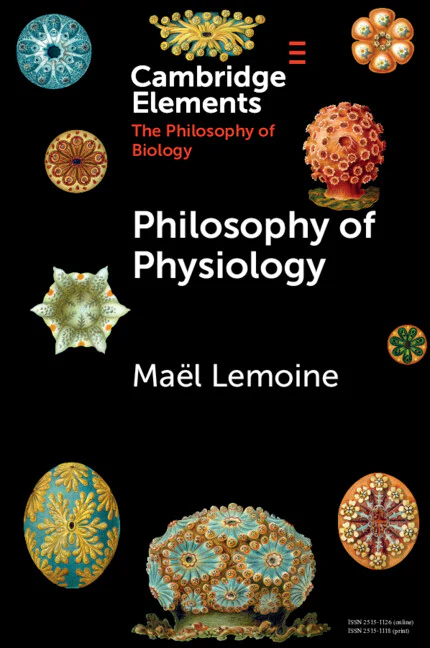
Philosophy of Physiology
Philosophy of Physiology
Time is ripe to complement the question 'what is health and disease?' in philosophy of medicine with a 'philosophy of physiology.' Indeed, the actors in this debate share the conviction that a 'foundational' concept dictates to this scientific field what is to be considered healthy or pathological and leaves it to explore only facts and mechanisms. Rejecting this presupposition, philosophy of physiology accepts that biomedical sciences explore and redefine their own object: the healthy, the pathological. Indeed, various theories of disease and health, that philosophers have rarely studied, form the core of biomedical research, too hastily considered as a science 'without theories.' The Element identifies them, and clarifies their content, presuppositions, and scope. Finally, it proposes a new question about the unity of the pathological phenomenon: not 'what do all diseases have in common?' but rather, 'why is the susceptibility to disease a universal and necessary characteristic of living beings?'
Original: $24.28
-65%$24.28
$8.50Product Information
Product Information
Shipping & Returns
Shipping & Returns
Description
Time is ripe to complement the question 'what is health and disease?' in philosophy of medicine with a 'philosophy of physiology.' Indeed, the actors in this debate share the conviction that a 'foundational' concept dictates to this scientific field what is to be considered healthy or pathological and leaves it to explore only facts and mechanisms. Rejecting this presupposition, philosophy of physiology accepts that biomedical sciences explore and redefine their own object: the healthy, the pathological. Indeed, various theories of disease and health, that philosophers have rarely studied, form the core of biomedical research, too hastily considered as a science 'without theories.' The Element identifies them, and clarifies their content, presuppositions, and scope. Finally, it proposes a new question about the unity of the pathological phenomenon: not 'what do all diseases have in common?' but rather, 'why is the susceptibility to disease a universal and necessary characteristic of living beings?'