Pilgrim's Gress: The Beckett Walk
Walking is a determining trope and structure in Samuel Beckett's oeuvre, furnishing a textual and performance figure, a framing device, and a material practice. The walk begins as a motif, becomes a rhythm, expands into a compositional principle, and culminates in an ontology -- a defining means by which his characters are cognitively embodied and by which meaning is grounded. The book contends that Beckett's literary pedestrianism involve passage from an evasive and narcissistic vestige of Romanticism and a solipsistic variation on Edwardian autonomy to an embrace of mutuality and transitory being: life not as a network of stations so much as a meshwork of ways, peripatetic coming and going as the basis of human possibility and ethical value. The study examines the Beckett walk with reference to, for instance, cognitive theory, materialities theory, environmental studies, infrastructure theory, cultural and literary history, speech-act theory, mobility studies and performance studies.
Product Information
Product Information
Shipping & Returns
Shipping & Returns
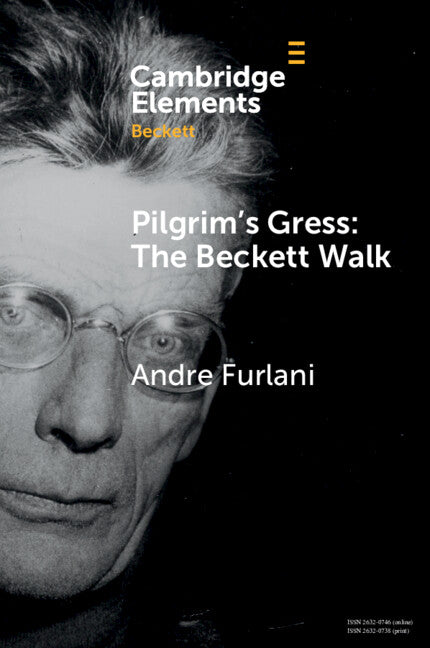
Pilgrim's Gress: The Beckett Walk
Pilgrim's Gress: The Beckett Walk
Walking is a determining trope and structure in Samuel Beckett's oeuvre, furnishing a textual and performance figure, a framing device, and a material practice. The walk begins as a motif, becomes a rhythm, expands into a compositional principle, and culminates in an ontology -- a defining means by which his characters are cognitively embodied and by which meaning is grounded. The book contends that Beckett's literary pedestrianism involve passage from an evasive and narcissistic vestige of Romanticism and a solipsistic variation on Edwardian autonomy to an embrace of mutuality and transitory being: life not as a network of stations so much as a meshwork of ways, peripatetic coming and going as the basis of human possibility and ethical value. The study examines the Beckett walk with reference to, for instance, cognitive theory, materialities theory, environmental studies, infrastructure theory, cultural and literary history, speech-act theory, mobility studies and performance studies.
Original: $24.28
-65%$24.28
$8.50Product Information
Product Information
Shipping & Returns
Shipping & Returns
Description
Walking is a determining trope and structure in Samuel Beckett's oeuvre, furnishing a textual and performance figure, a framing device, and a material practice. The walk begins as a motif, becomes a rhythm, expands into a compositional principle, and culminates in an ontology -- a defining means by which his characters are cognitively embodied and by which meaning is grounded. The book contends that Beckett's literary pedestrianism involve passage from an evasive and narcissistic vestige of Romanticism and a solipsistic variation on Edwardian autonomy to an embrace of mutuality and transitory being: life not as a network of stations so much as a meshwork of ways, peripatetic coming and going as the basis of human possibility and ethical value. The study examines the Beckett walk with reference to, for instance, cognitive theory, materialities theory, environmental studies, infrastructure theory, cultural and literary history, speech-act theory, mobility studies and performance studies.