Risks in Renaissance Art
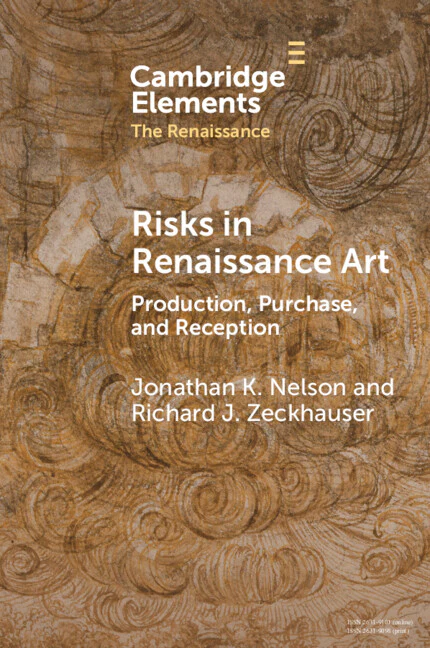
This Element represents the first systematic study of the risks borne by those who produced, commissioned, and purchased art, across Renaissance Europe. It employs a new methodology, built around concepts from risk analysis and decision theory. The Element classifies scores of documented examples of losses into 'production risks', which arise from the conception of a work of art until its final placement, and 'reception risks', when a patron, a buyer, or viewer finds a work displeasing, inappropriate, or offensive. Significant risks must be tamed before players undertake transactions. The Element discusses risk-taming mechanisms operating society-wide: extensive communication flows, social capital, and trust, and the measures individual participants took to reduce the likelihood and consequences of losses. Those mechanisms were employed in both the patronage-based system and the modern open markets, which predominated respectively in Southern and Northern Europe.
Product Information
Product Information
Shipping & Returns
Shipping & Returns
Risks in Renaissance Art
Risks in Renaissance Art
This Element represents the first systematic study of the risks borne by those who produced, commissioned, and purchased art, across Renaissance Europe. It employs a new methodology, built around concepts from risk analysis and decision theory. The Element classifies scores of documented examples of losses into 'production risks', which arise from the conception of a work of art until its final placement, and 'reception risks', when a patron, a buyer, or viewer finds a work displeasing, inappropriate, or offensive. Significant risks must be tamed before players undertake transactions. The Element discusses risk-taming mechanisms operating society-wide: extensive communication flows, social capital, and trust, and the measures individual participants took to reduce the likelihood and consequences of losses. Those mechanisms were employed in both the patronage-based system and the modern open markets, which predominated respectively in Southern and Northern Europe.
Original: $24.28
-65%$24.28
$8.50Product Information
Product Information
Shipping & Returns
Shipping & Returns
Description
This Element represents the first systematic study of the risks borne by those who produced, commissioned, and purchased art, across Renaissance Europe. It employs a new methodology, built around concepts from risk analysis and decision theory. The Element classifies scores of documented examples of losses into 'production risks', which arise from the conception of a work of art until its final placement, and 'reception risks', when a patron, a buyer, or viewer finds a work displeasing, inappropriate, or offensive. Significant risks must be tamed before players undertake transactions. The Element discusses risk-taming mechanisms operating society-wide: extensive communication flows, social capital, and trust, and the measures individual participants took to reduce the likelihood and consequences of losses. Those mechanisms were employed in both the patronage-based system and the modern open markets, which predominated respectively in Southern and Northern Europe.