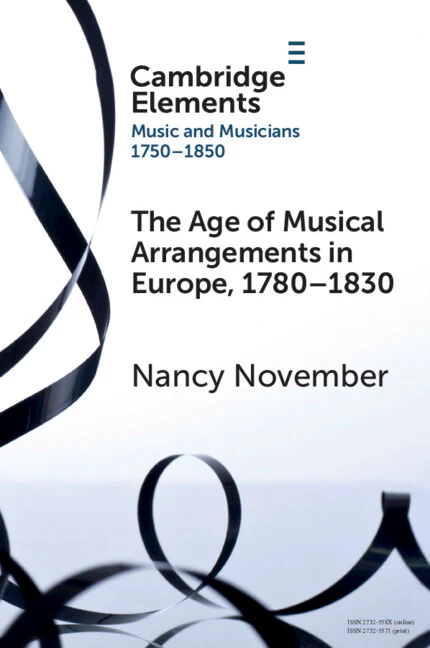
The Age of Musical Arrangements in Europe, 1780–1830
This Element considers the art and culture of arranging music in Europe in the period 1780–1830, using Haydn's London symphonies and Mozart's operas as its principal examples. The degree to which musical arrangements shaped the social, musical, and ideological landscape in this era deserves further attention. This Element focuses on Vienna, and an important era in the culture of arrangements in which they were widely and variously cultivated, and in which canon formation and the conception of musical works underwent crucial development. Piano transcriptions (for two hands, four hands, and two pianos) became ever more prominent, completely taking over the field after 1850. For various reasons, principal composers of the era under consideration, including Haydn, Mozart, and Beethoven, participated directly in the practice of arrangement. Motivations to produce arrangements included learning the art of composition, getting one's name known more widely, financial gain, and pedagogical aims.
Product Information
Product Information
Shipping & Returns
Shipping & Returns
The Age of Musical Arrangements in Europe, 1780–1830
The Age of Musical Arrangements in Europe, 1780–1830
This Element considers the art and culture of arranging music in Europe in the period 1780–1830, using Haydn's London symphonies and Mozart's operas as its principal examples. The degree to which musical arrangements shaped the social, musical, and ideological landscape in this era deserves further attention. This Element focuses on Vienna, and an important era in the culture of arrangements in which they were widely and variously cultivated, and in which canon formation and the conception of musical works underwent crucial development. Piano transcriptions (for two hands, four hands, and two pianos) became ever more prominent, completely taking over the field after 1850. For various reasons, principal composers of the era under consideration, including Haydn, Mozart, and Beethoven, participated directly in the practice of arrangement. Motivations to produce arrangements included learning the art of composition, getting one's name known more widely, financial gain, and pedagogical aims.
Original: $24.28
-65%$24.28
$8.50Product Information
Product Information
Shipping & Returns
Shipping & Returns
Description
This Element considers the art and culture of arranging music in Europe in the period 1780–1830, using Haydn's London symphonies and Mozart's operas as its principal examples. The degree to which musical arrangements shaped the social, musical, and ideological landscape in this era deserves further attention. This Element focuses on Vienna, and an important era in the culture of arrangements in which they were widely and variously cultivated, and in which canon formation and the conception of musical works underwent crucial development. Piano transcriptions (for two hands, four hands, and two pianos) became ever more prominent, completely taking over the field after 1850. For various reasons, principal composers of the era under consideration, including Haydn, Mozart, and Beethoven, participated directly in the practice of arrangement. Motivations to produce arrangements included learning the art of composition, getting one's name known more widely, financial gain, and pedagogical aims.